An Interview with Kees van Ooik
What if the biggest bottleneck in clinical trials isn’t scientific complexity but human choreography?
Across the industry, study teams still spend a staggering amount of time coordinating activity rather than conducting research. Endless email threads. Siloed tools. Data hand-offs that feel more like baton drops. And yet, an emerging trend is rewriting this reality: the rise of smart workflow orchestration in clinical trials.
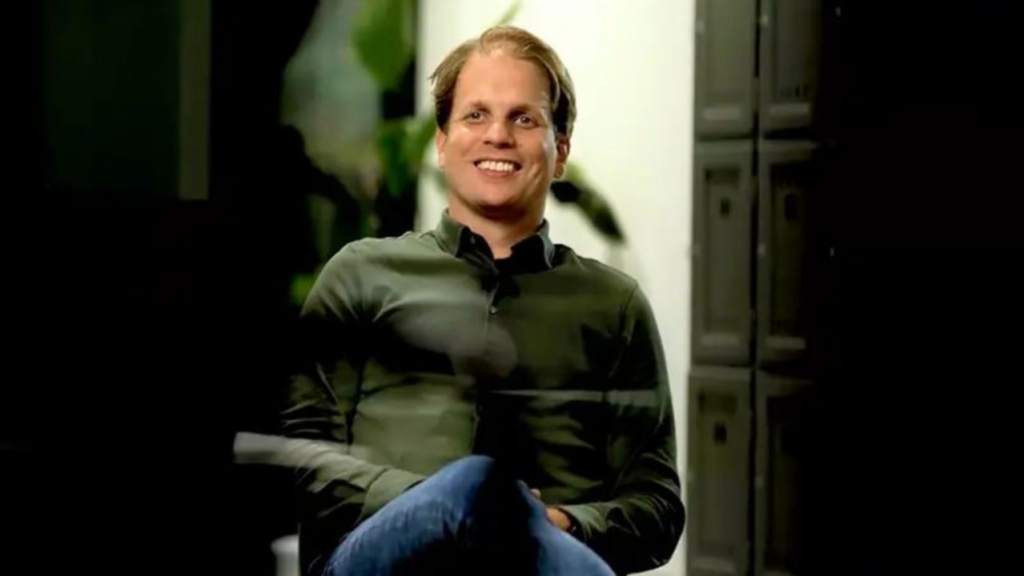
To unpack this shift and what “good” looks like when technology starts connecting the dots I sat down with someone who has been quietly (and sometimes loudly) pushing this transformation close to a decade: Kees Van Ooik, Vice President of eClinical Solutions at Almac Clinical Technologies. Before joining Almac, Kees co-founded and served as CEO of Your Research (now part of Almac Group), where he helped pioneer integrated, patient-centric trial platforms. His background blends clinical research, ICT engineering, and a deep belief that clinical trials should work for patients, sites and sponsors, not the other way around.
In this interview-style exploration, we look at the three macro-trends powering smart workflow orchestration today, why they matter, and where they’re taking clinical trials next.
1. From Fragmentation to Flow: Why Clinical Trials Are Finally Tackling Workflow Architecture
If clinical trials have an Achilles heel, it’s this: every part of the process has a tool, but few parts of the process have a connection. The latest Deloitte analysis of digital transformation in life sciences shows that, despite significant investment, many organisations still operate with “high-friction workflows” and disconnected operational layers, a theme echoed repeatedly in digital maturity assessments across the sector.
Further, a comprehensive overview published in NPJ Digital Medicine highlights the same issue: digital tools have expanded rapidly across clinical trials, but often in isolation, creating fragmented processes rather than cohesive operational flows. Rosa et al., 2021
Smart workflow orchestration aims to solve precisely this: connecting systems, automating the routine, routing tasks based on context, and reducing cognitive burden on researchers.
Kees mentions “In most organisations, the challenge isn’t the absence of technology, it’s the absence of a broader vision for how to make those technologies work together within a legacy software landscape. Workflow orchestration gives us the ability to elevate these systems into an overarching infrastructure, a true single pane of glass, rather than a sequence of disconnected, manual hand-offs.”
2. The Rise of Context-Aware Automation: When Tech Starts Working Like a Study Team Member
Automation used to mean something simplistic: “if X, then Y.” Today, the conversation has shifted decisively toward context-aware orchestration: systems that adapt based on roles, protocol logic, data inputs, and live study conditions.
A foundational paper in NPJ Digital Medicine by Inan et al. describes how digitising clinical trials introduces the opportunity for operational logic that is more dynamic, responsive, and built around context rather than rigid, pre-scripted rules.
More recently, a clinical-trials-informed framework for AI adoption published in NPJ Digital Medicine (2025) emphasises the need for traceability, role-based logic, and pre-defined pathways; all core characteristics of smart workflow orchestration.
Together, these works underline a shift away from manual interpretation and toward technology that behaves more like a supporting study team member: understanding context, guiding next best actions, and reducing operational risk.
Kees says “Context-aware automation isn’t about taking people out of the loop, it’s about taking chaos out of the loop. If technology can route tasks intelligently, surface the right data, and guide users based on their role and the protocol’s real rules, then teams regain time for real scientific thinking.”
3. Human-Centred Orchestration: Why Smart Workflows Must Work for Sites and Patients First
Perhaps the most overlooked trend is the simplest: workflow orchestration only works if it is human-centred. For sites and patients, the burden of trial participation is already high. When workflows are poorly designed or overly complicated, that burden becomes a bottleneck to recruitment, retention, and data quality.
A recent BMJ Open systematic review of international trial operations highlights how administrative load, logistical complexity, and fragmented processes directly contribute to staff fatigue, protocol deviations, and slower study performance.
Other research, including scoping reviews of digital workflow tools in healthcare, echoes this: digital interventions only improve outcomes when they reduce workload, streamline tasks, and support professionals in their real-world practice patterns. Fletcher et al., 2023
Smart orchestration is not about automation for automation’s sake. It’s about removing unnecessary steps, aligning tasks with natural behaviour, and empowering the humans who keep clinical trials running.
Kees emphasises “If workflow orchestration doesn’t make life easier for sites and patients, it isn’t really orchestration, it’s just more software and certainly not a return on investment. The goal is to build experiences that feel natural, intuitive, and supportive, not burdensome.”
Conclusion: The Future of Trial Operations Is Integrated, Intelligent, and (Finally) Humane
Workflow orchestration is not a trend for trend’s sake. It is being adopted across every industry because no single system can solve the full problem, and replacing legacy platforms through costly and risky migrations is often not feasible, even when we want to innovate. It is a response to the fundamental reality that clinical trials are now too complex, too distributed, and too data-heavy to be managed manually.
For years, the industry added tools. Now it is adding connections. For years, the industry digitised documents. Now it is digitising decisions. And for years, the industry accepted inefficiency as normal. Now it is demanding systems that work like modern digital experiences, fluent, adaptive, and designed around the human beings who run and participate in research.
Kees’ perspective highlights a larger truth: smart orchestration isn’t about replacing people. It’s about freeing them. If we get this right, clinical research becomes not only faster and more reliable but also a more humane ecosystem where technology carries the load it should, and people focus on the science and care that matter most.
References
- Deloitte. (2023). Digital transformation in life sciences. https://www2.deloitte.com/us/en/pages/life-sciences-and-health-care/articles/digital-transformation-in-life-sciences.html
- Rosa, C. et al. (2021). Using digital technologies in clinical trials. NPJ Digital Medicine. https://www.ncbi.nlm.nih.gov/pmc/articles/PMC8734581/
- Inan, O.T. et al. (2020). Digitizing clinical trials. NPJ Digital Medicine. https://www.nature.com/articles/s41746-020-0302-y
- You, J.G. et al. (2025). A clinical trials informed framework for AI implementation in healthcare systems at scale. NPJ Digital Medicine. https://www.nature.com/articles/s41746-025-01506-4
- Gumber, L. et al. (2024). Operational complexities in international clinical trials: a systematic review. BMJ Open. https://bmjopen.bmj.com/content/14/4/e077132.full.pdf
- Fletcher, E. et al. (2023). Workload and workflow implications associated with electronic clinical decision support tools in primary care: a scoping review. BMC Primary Care. https://bmcprimcare.biomedcentral.com/articles/10.1186/s12875-023-01973-2
About Kees Van Ooik
Kees Van Ooik is Vice President of eClinical Solutions at Almac Clinical Technologies. He was the Co-Founder and CEO of Your Research (now part of the Almac Group) and has over a decade of experience in clinical research technology and ICT. A visionary entrepreneur in integrated trial platforms, Kees is known for designing patient-centric, site-empowering digital ecosystems that modernise how clinical trials operate end-to-end.