All posts
AI is embedding itself into clinical research, mostly indirectly at this stage. From patient recruitment to data cleaning, protocol optimisation to predictive analytics, the upside is clear: faster trials; better targeting and reduced cost. But when you step into the literature, a more balanced picture emerges...
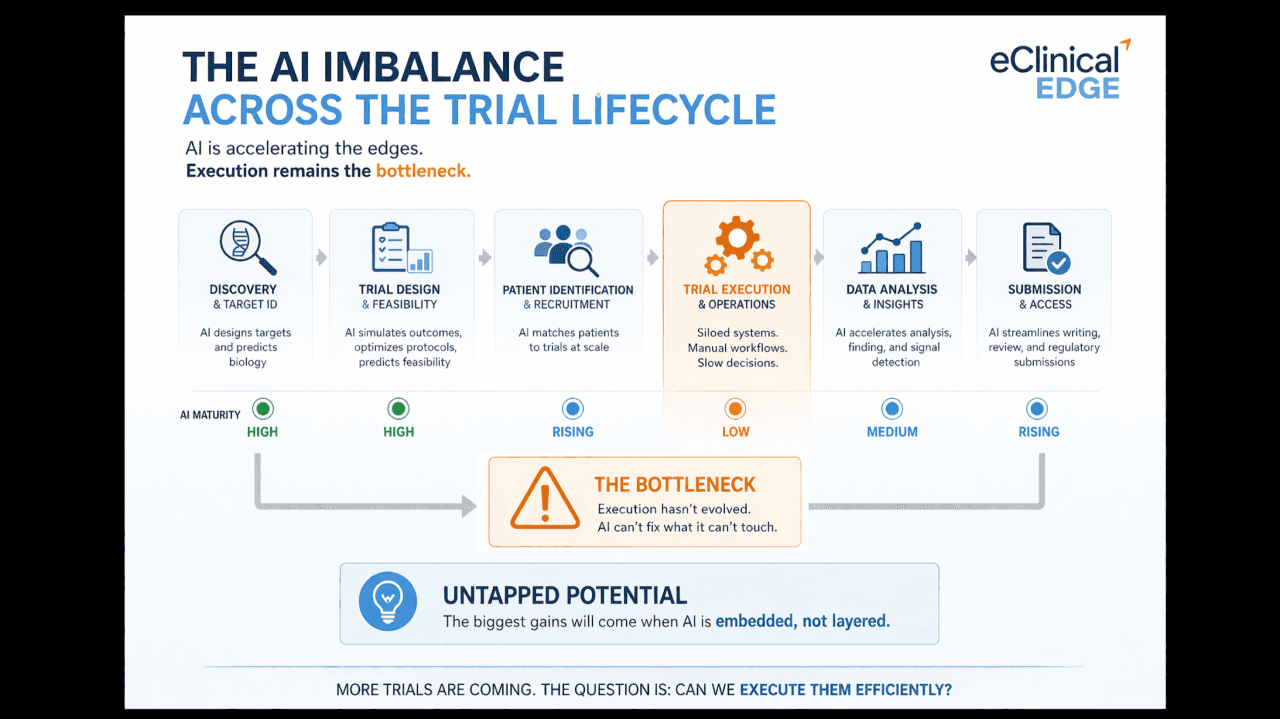
Over the past few months, I’ve noticed something change in how AI is being discussed in clinical trials. Less hype. More proof points. And importantly — more specific use cases emerging. Three recent updates caught my attention. Individually, they look incremental. Collectively, they tell a much bigger story.
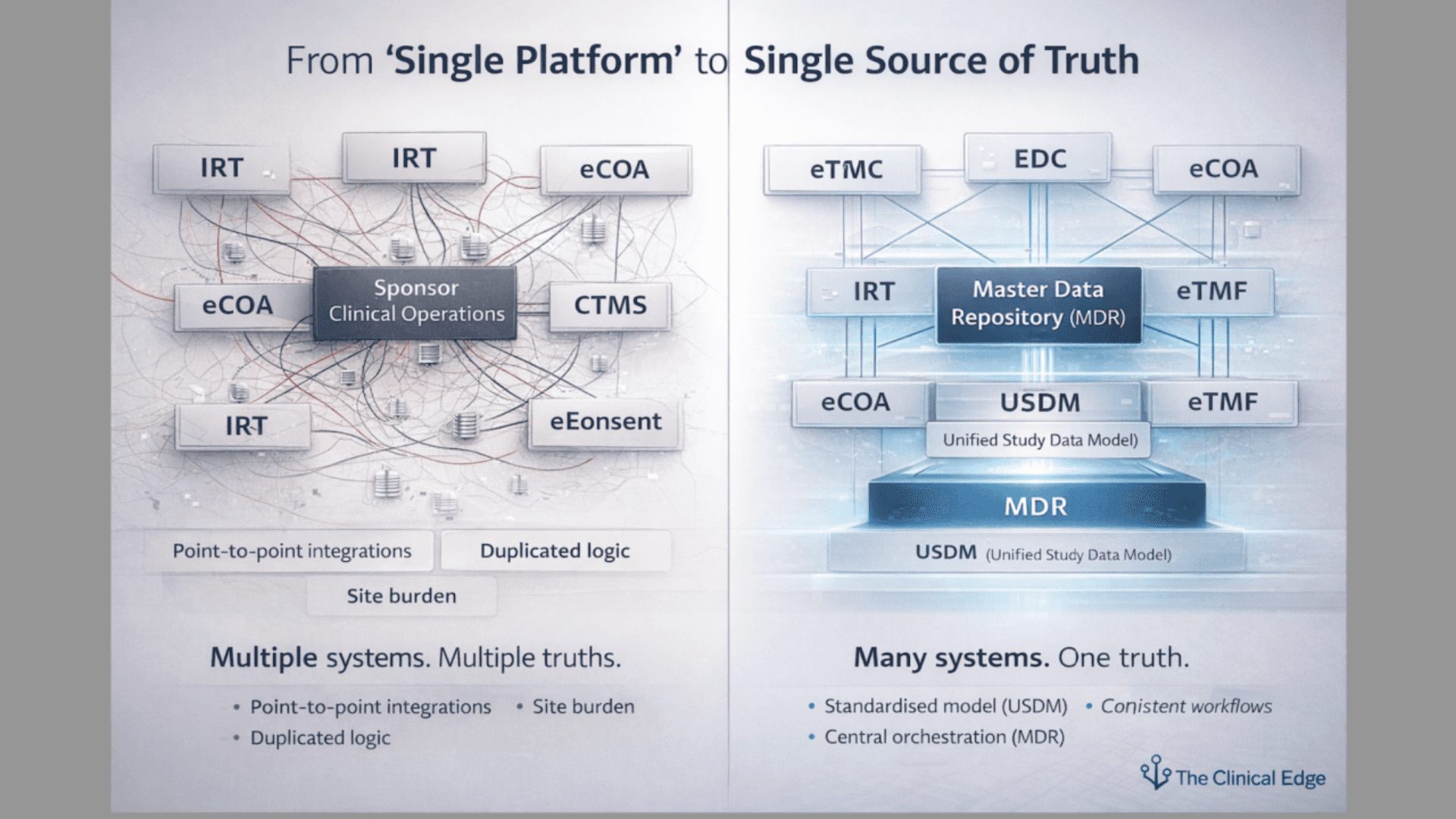
How to fix fragmentation without pretending it doesn’t exist

There’s an assumption in clinical trials that doesn’t get challenged nearly enough: If each system is good… then more systems must be better. More specialised. More powerful. More “best-of-breed”. But spend a day at a clinical trial site, and that logic starts to unravel.

There’s a quiet lie circulating in clinical trials. It’s dressed up as sophistication. It sounds like maturity. It often appears in RFPs.

Clinical trial start-up — the phase encompassing vendor onboarding, system build and configuration, site activation and training — persistently consumes time, introduces friction and contributes to costly delays in getting first patient in. For decades this has been driven by an industry-wide reliance on narrative, unstructured protocols and disconnected operational hand-offs.
AI is embedding itself into clinical research, mostly indirectly at this stage. From patient recruitment to data cleaning, protocol optimisation to predictive analytics, the upside is clear: faster trials; better targeting and reduced cost. But when you step into the literature, a more balanced picture emerges...
Over the past few months, I’ve noticed something change in how AI is being discussed in clinical trials. Less hype. More proof points. And importantly — more specific use cases emerging. Three recent updates caught my attention. Individually, they look incremental. Collectively, they tell a much bigger story.
How to fix fragmentation without pretending it doesn’t exist
There’s an assumption in clinical trials that doesn’t get challenged nearly enough: If each system is good… then more systems must be better. More specialised. More powerful. More “best-of-breed”. But spend a day at a clinical trial site, and that logic starts to unravel.