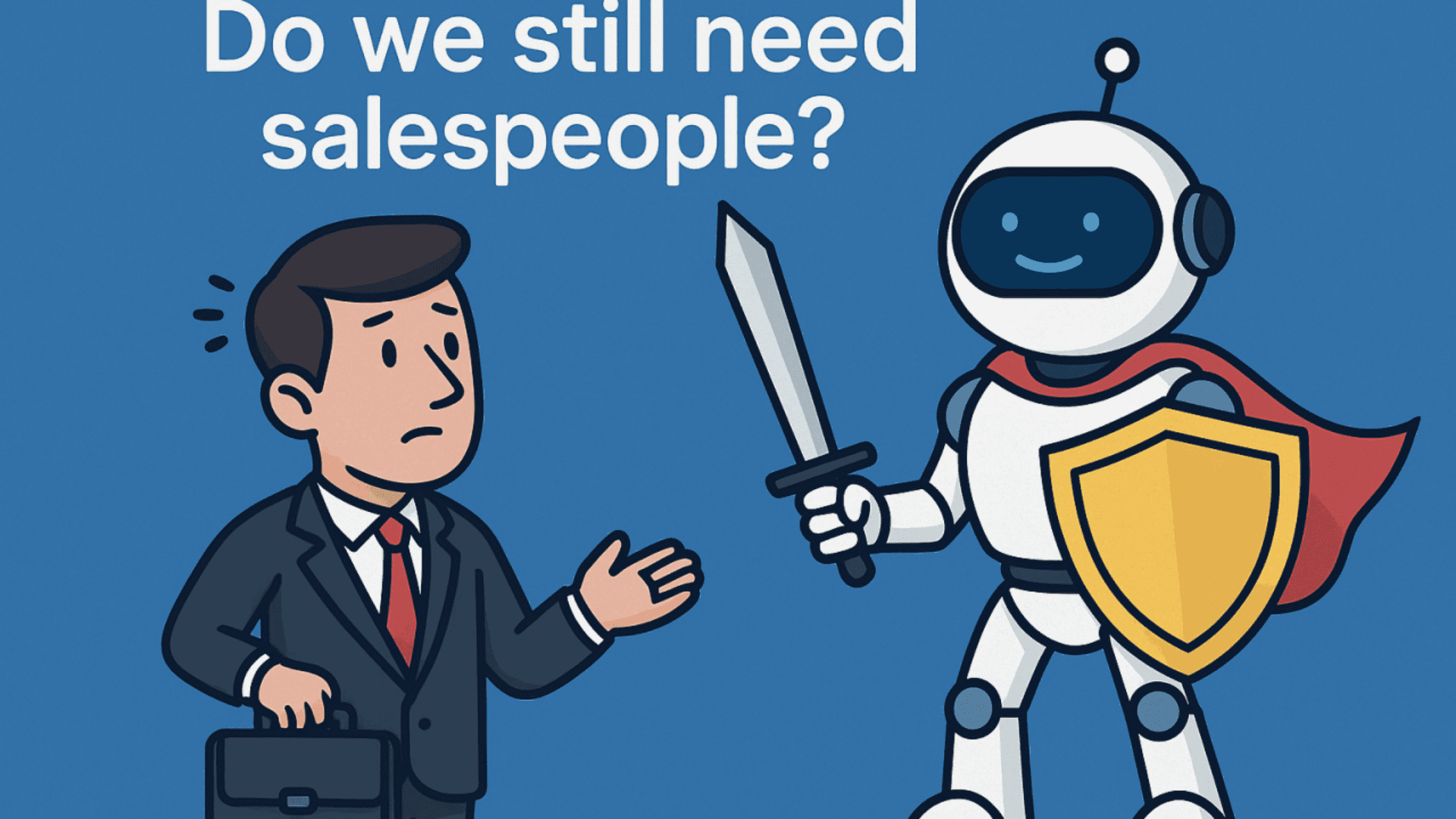
Do We Still Need Sales & BD People in Clinical Trials Post-AI?
A few years ago, “business development” in clinical trials meant two things: Canvassing leads (sometimes cold, often awkward). Playing the order taker when a sponsor already knew what they wanted.
A few years ago, “business development” in clinical trials meant two things:
Canvassing leads (sometimes cold, often awkward).
Playing the order taker when a sponsor already knew what they wanted.
Fast-forward to 2025, and AI has barged into the BD cycle like an uninvited dinner guest who also happens to be a Michelin-star chef. Prospecting? Automated. Account intel? Scraped in seconds. Proposal drafting? AI can churn out a first draft before you’ve even finished your coffee.
So, here’s the question: if AI can handle the busywork, what’s left for the human BD professional?
Spoiler: quite a lot. But the role looks less like a quota-chasing salesperson and more like a sherpa or investigative journalist. Someone who can guide, uncover, interpret, and build trust in a way no algorithm can.
What AI Can (and Should) Do in the Sales Cycle
AI excels at the top and middle of the funnel, the places where scale and speed matter most.
Prospecting & targeting: AI can comb through LinkedIn, PubMed, and trial registries to find companies running relevant studies or struggling with inefficiencies [1].
Lead scoring: By analysing engagement patterns, past deal cycles, and CRM behaviour, AI predicts which opportunities are warmest. [2]
Content generation: First drafts of proposals, email sequences, or even pitch decks can be built in minutes. (They’ll still need human polish, but the days of staring at a blank slide deck are over.)
Competitor intel: Natural language processing (NLP) and web-scraping tools can monitor competitors’ press releases, recruitment metrics, or conference abstracts.
In other words, AI is the canvasser, the desk researcher, the inbox scribe.
What Humans Must Still Do (and Always Should Have)
If AI can open doors, humans still need to walk through them. And not like door-to-door sales reps but as guides and investigators.
Trust-building: Sponsors and CROs don’t sign multimillion-dollar tech deals because of an algorithm, they sign because a human empathised with their pressure points and showed credibility.
Interpretation: AI can give you data, but humans translate it into a compelling story: “Here’s what your last trial cost in missed recruitment milestones. Here’s how we’d fix it.”
Discovery-as-journalism: Instead of rapid-fire pitches, the best BD people ask “obvious” questions that unearth hidden problems. Like journalists, they uncover the story behind the RFP.
Sherpa-style guidance: Once a prospect is interested, the BD role becomes about de-risking every step of the journey, simplifying procurement, clarifying regulatory fit, and making the buyer feel safe to move forward.
Think less “hunter with a quota” and more “trusted sherpa up a mountain.”
The Blended Model: AI + Human = Future BD
So do we still need sales and BD people in clinical trials? Absolutely. But not as they once were.
Here’s the emerging division of labour:
AI handles: Prospecting, intelligence gathering, lead qualification, first-draft content.
Humans handle: Relationship-building, strategic discovery, trust, storytelling, final deal-shaping.
Or put differently: AI is the exoskeleton. Humans are the climbers. Together, they can reach summits that neither could alone.
Conclusion
The BD role isn’t disappearing...it’s evolving. If you’re still stuck in “order taker” mode, AI will outpace you. But if you lean into curiosity, trust, and sherpa-style guidance, you’ll be doing the one thing AI can’t: making people feel safe enough to say yes.
References
1. AI Augmenting B2B Sales Process
Title: AI in Sales: Laying the Foundations for Future Research Summary: Clarifies AI’s current role and future potential across sales functions, highlighting which tasks should stay human-driven.
Link: Tandfonline – AI in Sales: Laying the Foundations for Future Research (Taylor & Francis Online)
2. Practical Insight on AI in Sales Workflow
Title: Companies Are Using AI to Make Faster Decisions in Sales and Marketing Summary: Fast-moving sales teams increasingly rely on AI for lead prioritization, next-best-action recommendations, and churn risk identification.
Link: Harvard Business Review – Companies Are Using AI to Make Faster Decisions in Sales and Marketing (Harvard Business Review)
No salespeople were harmed in the process of researching and writing this article.
About
Delivering independent journalism, thought-provoking insights, and trustworthy reporting to keep you informed, inspired, and engaged with the world every day.
Featured Posts